
RGTA® mode of action
Our ReGeneraTing Agents (RGTA®) technology is based on the central role of the extracellular matrix (ECM) in tissue and organ repair and regeneration.
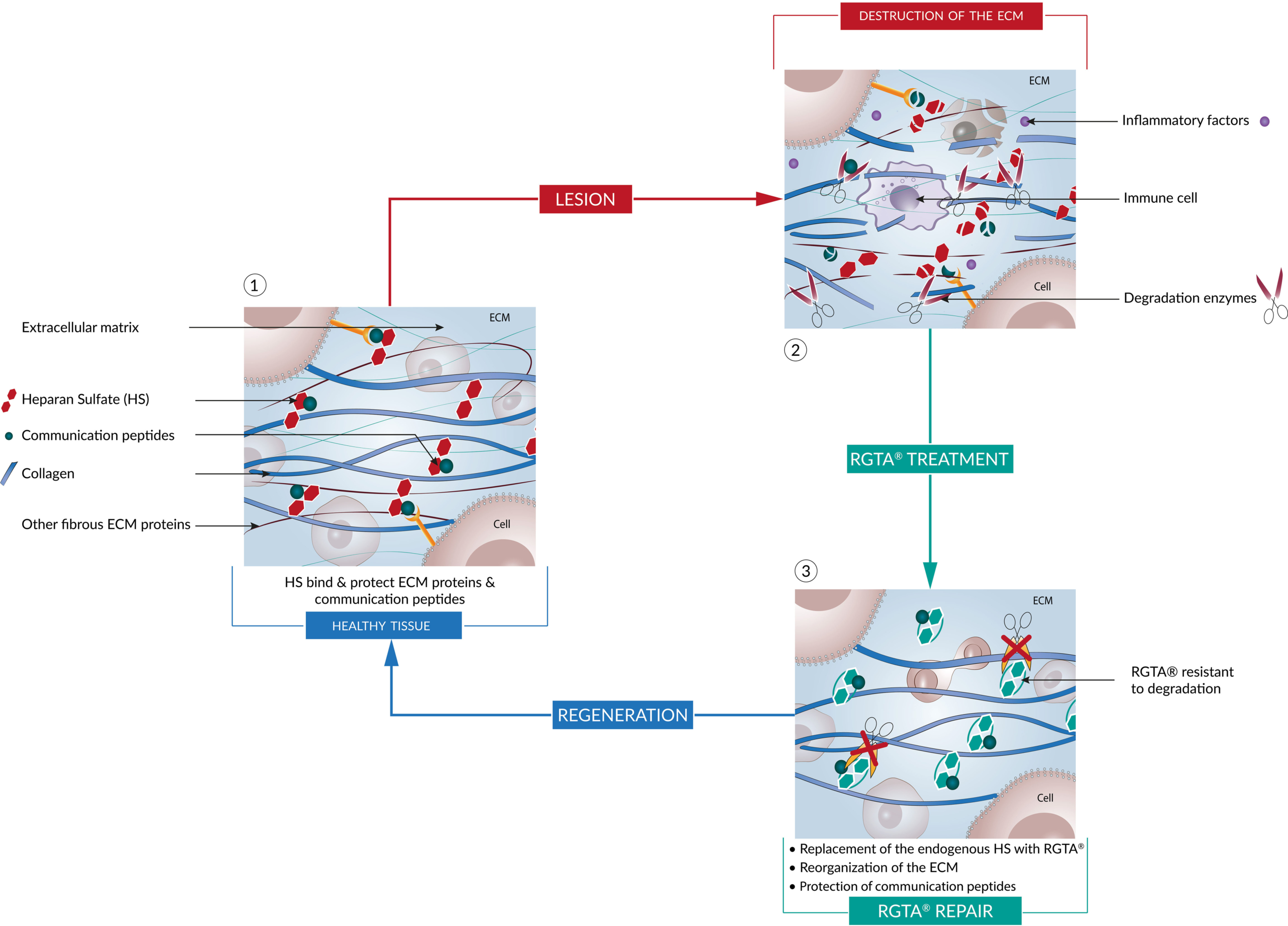
This regenerative process is regulated by specific signaling molecules—communication peptides—present in the extracellular space. These molecules are normally stored, protected, and retained by a family of polysaccharides known as heparan sulfates (HS). Together with matrix proteins such as collagen and elastin, they form the structural scaffold of the ECM (see Scheme 1).
Following tissue injury, enzymes are released that degrade these ECM components, including heparan sulfates. As a result, communication peptides are no longer protected and undergo accelerated degradation (see Scheme 2).
Example of RGTA in Cacipliq 20®
RGTA’s main action
RGTA® are polysaccharides (complex sugars) that act as structural and functional biomimetics of natural heparan sulfates, while being resistant to enzymatic degradation.
The primary mechanism of action of RGTA® is to replace degraded heparan sulfates and thereby restore the extracellular matrix (ECM) scaffold through direct physical interactions with matrix proteins, including collagens and glycoproteins. Restoration of this scaffold protects communication peptides and promotes more effective tissue regeneration (see Scheme 3).

